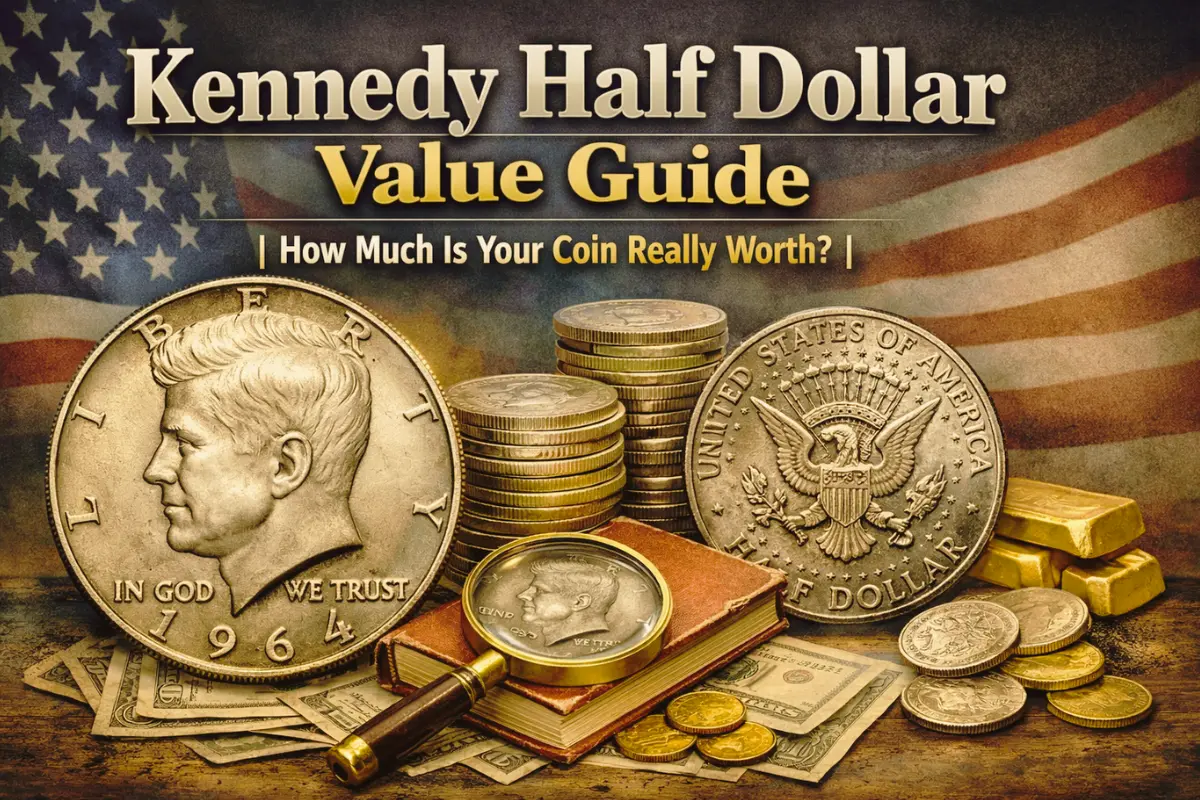
Kennedy Half Dollar Value Guide | The Kennedy half dollar value has become one of the most searched coin topics among collectors and the general public. This coin, first issued in 1964 to honor President John F. Kennedy, holds both historical significance and economic interest. Over time, its value has varied considerably depending on the year, mint mark, condition, and silver content. While many Kennedy half dollars are worth their face value of 50 cents, collectible versions can command significantly higher prices.
The Origins of the Kennedy Half Dollar
The story of the Kennedy half dollar value begins with its origins. Following President Kennedy’s assassination in 1963, the U.S. Mint quickly designed and issued a commemorative half dollar in 1964. That first year’s issue contained 90% silver, making the metal content alone more valuable than modern coins. The public eagerly collected the initial release, resulting in many coins going into albums and collections rather than circulating.
Silver Content and Its Impact
The Kennedy half dollar value is heavily influenced by its silver content, especially in coins from 1964 to 1970. The 1964 half dollar contains 0.36169 troy ounces of silver, and its melt value typically fluctuates with silver market prices. In the 1965-1970 issues, the silver content was reduced to 40%, but these coins still possess a higher intrinsic metal value than modern copper-nickel pieces. Because silver prices fluctuate, the actual value of these older coins is often higher than their face value.
Key Dates That Increase Value
The Kennedy half dollar value is often higher for certain key dates. The first year issue of 1964 is typically the most valuable in lower grades because it contains 90% silver and is highly collectible. Other dates, such as 1970, with specific mint marks, or proof sets from years when production was limited, can also command a premium price. Collectors often seek coins with minimal wear, sharp strike quality, and well-centered designs.
Mint Marks and Their Role
Kennedy half dollar values vary with mint marks, which indicate where the coin was minted. The Philadelphia Mint typically did not use a mint mark on early coins, while Denver issues bear a “D” and San Francisco proofs have an “S.” In some years, coins from one mint saw less circulation or were hoarded by collectors, making certain mint-specific versions harder to find and more valuable.
Condition and Grading Matter
The value of a Kennedy half dollar depends heavily on its condition, which coin collectors describe using grades. Coins in “uncirculated” condition, meaning they show no signs of wear from circulation, are worth significantly more than worn coins. Professional grading services assign numerical grades, and even a small scratch or blemish can affect the price. A top-graded Kennedy half dollar from a particular year can sell for many times the price of an average-condition coin.
Common vs. Rare Coins
The value of a Kennedy half dollar also depends on whether the coin is common or rare. Most Kennedy half dollars minted after the 1970s were produced in large quantities and are still readily available today. Because they contain no silver and are so plentiful, many of these common date coins are worth little more than 50 cents, unless they are in pristine condition or part of a complete set. Rare dates, low mintage, or production errors can significantly increase the value.
Error Coins and Special Examples
The value of Kennedy half dollars also includes error coins that feature unique production mistakes. Errors can include double dies, off-center strikes, missing letters, or unusual planchet flaws. Collectors cherish these errors because they are rare and visually interesting. Even modern Kennedy half dollars with documented errors can fetch a good price at auction if authenticated.

Proof and Special Edition Coins
The value of Kennedy half dollars also extends to proof and special edition coins. Proof coins are struck using specially polished dies and planchets and are intended for collectors, not for circulation. These proof sets often come directly from the San Francisco Mint and feature a mirror-like finish. Special collection sets issued by the U.S. Mint may include coins with different finishes that appeal to advanced collectors.
How to Determine the Value of Your Coin
The value of your specific Kennedy half dollar depends on a few basic steps. First, identify the year and mint mark. Next, determine the condition by comparing it to grading guides or consulting a professional. If it’s a 1964-1970 coin, check current silver prices. Finally, compare it to similar coins recently sold at auction or through dealer price lists. Expert coin guides can help estimate a price range rather than a single number.
Market Trends and Demand
The value of a Kennedy half dollar is not static; it fluctuates based on market trends and collector demand. Interest in presidential coins, changes in silver prices, and the influx of new collectors all influence the price. For example, when silver prices rise, the demand for older silver half dollars often increases. Conversely, when the metal market is stable, the coin’s condition and rarity become more significant factors.
Final Thoughts on Value
The value of a Kennedy half dollar can range from just 50 cents to hundreds or even thousands of dollars, especially for rare, high-grade, or error coins. While most coins won’t be worth more than their face value in everyday transactions, paying attention to the year, mint mark, silver content, and condition can help you identify hidden value. Coins stored in albums or purchased decades ago may now be worth considerably more, making this a potentially rewarding area for both new and experienced collectors.